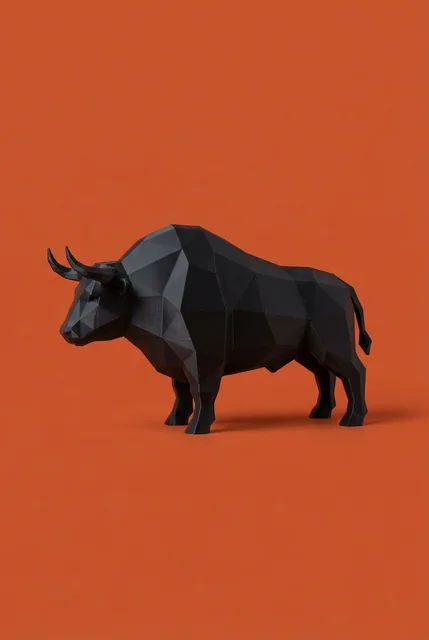
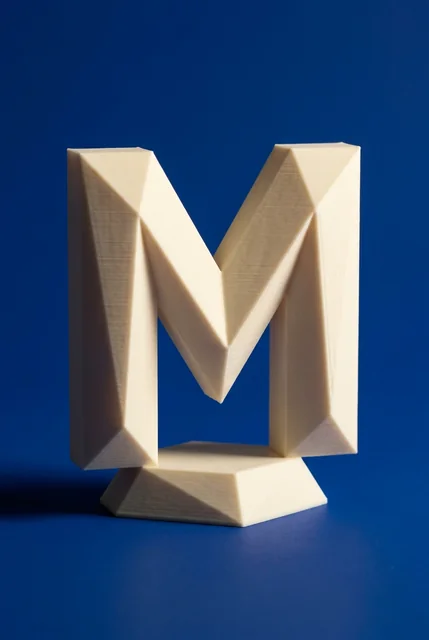
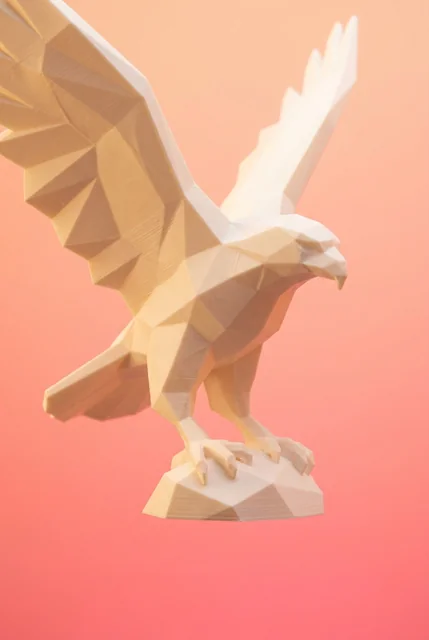


Most advice on how to display sculptures at home comes from galleries and sculptors who sell bronze. That is not a criticism; they know their subject. But it shapes the advice. It assumes a heavy, expensive object that can sit in full sun, survive a knock and weigh enough that nobody's cat is moving it.
The sculpture in most real homes is not like that. It is resin, ceramic, plaster, wood, and more and more often 3D printed plastic. A bust on a bookshelf, a set of animal figures on a console, a landmark model a friend brought back from a trip. These pieces follow the same rules for looking good as a bronze does. They follow very different rules for staying in one piece.
So this covers both: how to place a sculpture so it reads well, and what to check so it is still there, unfaded and upright, a year from now.
Decide what the piece is doing before you place it
Every sculpture in a room is doing one of two jobs. Either it is the focal point, the thing the eye lands on first, or it is part of a group, where the arrangement matters more than any single object.
Decide which before you move anything. A focal piece needs space around it and very little competing with it. A group piece needs company: other objects that share something with it, whether that is a subject, a color or a material.

Most display problems come from mixing the two. A striking piece gets crowded by frames and candles until it stops being striking. Or a small figure meant to be part of a set gets put on its own in the middle of a large table, where it looks like something someone forgot to put away.
Put it where it can be seen from more than one side
If there is one rule for how to display a sculpture, it is this one. A print hangs flat and is seen from the front. A sculpture has a back, two sides and a top, and it looks best where you can move around it, or at least see it at an angle.
Aim for eye level, and be honest about whose eyes. In an entryway or on a console, that means standing height. In a living room, most looking happens from the sofa, so a piece on a low coffee table is seen from above and a piece on a tall shelf is seen from below. Sit down and check before you commit.

Keep it out of the way of traffic. The corner of a console in a narrow hallway gets brushed by bags and shoulders all day. The middle of a room can work for a large freestanding piece, but only if nobody has to walk around it to reach the kitchen.
The surfaces that work best, in rough order:
- Bookshelves and bookcases, where a sculpture breaks up rows of spines and sits at a naturally good height. We cover how to build the whole case around objects like these in Bookshelf Decorating Ideas.
- The mantel, which is already the focal point of the room, with one important caution if you light the fireplace. See Mantel Decor.
- Side tables and consoles, which put a piece near where people sit or pass, often next to a lamp that lights it for free.
- Recessed niches and the ends of built-ins, which frame a piece the way a gallery wall would.
- The coffee table, but only for something low and sturdy, since it gets bumped more than any other surface in the house.
Match the size of the piece to the size of the spot
Scale is where most displays go wrong, and it goes wrong in both directions. A large sculpture in a small room dominates it. A small one on a big surface disappears and makes the room look sparse rather than considered.
Two quick checks. First, look at the piece from where you normally see it. If you cannot make out its shape from across the room, it is too small for that spot: raise it, move it closer to where people sit, or group it with others. Second, give tall, narrow pieces room above them. A slender figure under a low shelf or a heavy ceiling looks squashed, while the same piece in front of a tall wall adds height to the whole room.
Small pieces almost always look better lifted. A figure a few inches tall sitting flat on a table is seen from above and loses its face. On a stack of two hardcover books or a small block, it meets the eye.

If you have found the right subject but the wrong size for your shelf or niche, that is fixable with printed pieces in a way it is not with a cast bronze. A custom order can resize an existing model from our catalog to fit the space. There is a size limit for a single printed part, and larger pieces are printed in sections.
Display a collection as a set, not a line-up
Collections are where sculpture display gets fun, and where it most often ends up looking like a shop shelf. The instinct is to line pieces up evenly, largest to smallest. It is tidy. It is also exactly how things look when they are for sale.
What makes a group read as a collection instead:
- A clear common thread. Subject, era, material or color. Busts of historical figures. Animals. Famous buildings. The thread is what makes six different objects look like a decision.
- Odd numbers. Three or five pieces group naturally. Four tends to split into two pairs.
- Different heights, with one clearly tallest piece anchoring the group and the others stepping down from it.
- Space between pieces. Each object needs a little air to be seen as itself. Crowded together, they merge into one lumpy shape.
- No stacking. Sculptures balanced on sculptures read as storage, and they are one bump away from a break.
Color is the easiest thread to add after the fact. A set of busts of presidents, or landmark models like the Statue of Liberty and the Eiffel Tower, can look mismatched when every piece is a different finish. Print them all in the same color, say a warm bronze or a clean white, and they suddenly look like a collection somebody planned. That is one of the practical advantages of our sculptures and statues: each one is printed to order in the color you choose, from the same 20-color palette, so a set can match across pieces bought months apart.

If you would rather add color by hand, painting a printed figure is simpler than most guides suggest; we go through it in How to Paint 3D Prints.
Pedestals, risers and what to put under a piece
Large pieces displayed on the floor usually need a pedestal to be seen at all. Small pieces on a table often need a riser for the same reason. In both cases, the support should do its job and then disappear.

That means two things. It has to be sturdy: wider than the base of the sculpture and heavy enough not to wobble when bumped. And it should be visually quiet, in a color and material that belongs to the room rather than competing with the piece on top. A glossy black pedestal under a dark bronze figure makes one tall black shape; a matte pedestal in the wall color lets the sculpture float.
It does not need to be expensive. A plain wooden box, painted to match the wall, makes a perfectly good indoor plinth. A stack of books with a neutral cover works for tabletop pieces. The one thing to avoid is a narrow, top-heavy stand under a light object, which is a recipe for the next section.
Light it from above and a little in front
Lighting advice for sculpture contradicts itself. Some galleries say never use a spotlight because it hides detail in shadow. Others recommend exactly that. Both are describing the same thing from different sides.
A single hard light on its own does create deep shadows, and in those shadows detail disappears. But a directional light combined with the ordinary soft light of the room is what gives a sculpture its shape. Without some direction, a three-dimensional piece looks flat. So use both: general room light, plus one light aimed at the piece from above and slightly in front.
Two positions to avoid. Light from directly below turns any face into a campfire ghost story. Light from directly behind turns the piece into a silhouette, which can look dramatic in a photo but hides everything you bought it for.
The wall behind matters as much as the light in front. Contrast is what makes a sculpture visible: a white bust disappears against a white wall and stands out against sage, navy or a warm gray. A dark bronze does the reverse. If you cannot change the wall, change what is directly behind the piece: a book spine, a framed print, a plant.

Check what it is made of before you pick a sunny spot
This is where the bronze-first advice can actively do damage. A bronze sculptor will quite reasonably tell you a windowsill is one of the best places to display a small piece, because it has the best light in the house. For bronze or stone, that is true.
For almost everything else, a sunny window is a risk:
- Resin. Cast resin pieces, including bronze-finish resin, can crack from the heat that builds up in a south-facing window, especially where thin sections carry weight, like legs or outstretched arms. Even sculptors who specialize in bronze warn about this for their resin editions.
- 3D printed plastic. Most printed decor, including ours, is PLA, which softens at 131 to 140°F (55 to 60°C). Sunlight through glass heats a sill far beyond the temperature of the room, and a thin part can slowly lean or warp. Colors also fade over time in direct sun, painted or not.
- Painted and dyed finishes of any kind, which fade in ultraviolet light no matter what the object underneath is made of.
- Glazed ceramic and porcelain handle light and heat well; their risk is falling, not fading.

The same logic applies to heat from below. A mantel over a working fireplace gets warm, and what is safe to leave on it depends on the material; the details are in our mantel guide. As a rule, give anything that is not metal, stone or glazed ceramic a bright spot that sunlight does not hit directly.
Keep a light piece from tipping over
Heavy bronze stays where you put it. A resin, plaster or printed figure weighs a fraction of that, and it falls over far more easily than people expect: a door closes hard, a cat investigates, someone dusts in a hurry. Tall pieces with a narrow base are the most likely to go.

A few habits prevent almost all of it:
- Level, stable surfaces only, and not right at the edge of a shelf or table.
- A small ball of museum putty under the base. It is a removable, reusable putty sold specifically for holding collectibles in place, and it is standard practice for collectors in earthquake country, which includes us here in Southern California. Test it on an unseen part of the base first, since some finishes can mark.
- A wider, heavier plinth under anything top-heavy, rather than a narrow stand.
- A glass-front cabinet for the pieces you care most about if there are small children or pets in the house. It also solves most of the dust problem below.
Dust it without damaging the finish
Sculpture collects dust in exactly the places that make it interesting: carved detail, folds of cloth, feathers, hair. Printed pieces also have fine layer lines on their surface that hold dust in a way smooth porcelain does not.
The gentlest tool is the best one. A soft makeup brush or a clean, soft paintbrush lifts dust out of detail without scratching, and a microfiber cloth handles smooth areas. For most pieces that is all they ever need.
If a printed piece needs more than dusting, use a soft cloth with cool or lukewarm water, no warmer than 104°F (40°C), and a small drop of mild dish soap. Wipe it rather than soaking it, because water trapped between layers takes a long time to dry out. Skip alcohol, vinegar, acetone, bleach and anything abrasive: they dull the surface and can weaken the plastic. Bronze, stone and painted pieces each have their own care needs, so follow what the maker recommends. Our own care guidance is on the FAQ page.
Frequently asked questions
Where should I put a sculpture in my living room?
Somewhere it can be seen from the sofa and from at least two sides: a bookshelf, the mantel, a side table next to a lamp, or a console behind the sofa. Keep it out of walking paths, and check the height from a seated position, since that is where most looking happens.
How do you display small sculptures?
Raise them and group them. A small piece placed flat on a large surface disappears, so lift it on a stack of books or a small block to bring it closer to eye level. Two or three small pieces that share a theme or color, arranged at different heights, read far better than one small piece on its own.
What is the best lighting for a sculpture at home?
Soft general room light plus one directional light from above and slightly in front. That combination shows the shape without hiding detail in hard shadow. Avoid lighting a piece from directly below or directly behind.
How do I keep a statue from falling over?
Place it on a level surface away from the edge, put a little museum putty under the base, and use a wider, heavier plinth under anything top-heavy. In homes with small children or pets, a glass-front cabinet is the most reliable option for pieces you do not want to risk.
How do you clean a 3D printed sculpture?
Dust it with a soft brush. If it needs more, wipe it with a soft cloth, water no warmer than 104°F (40°C) and a little mild dish soap, without soaking it. Avoid alcohol, acetone, vinegar, bleach and abrasives, and keep it out of the dishwasher and direct sun.
Print Foundry is a 3D printing studio in Anaheim, California. We print sculptures, statues and busts and home decor in PLA, to order, in 20 colors. If a model is the right piece but the wrong size for your space, a custom order can resize it; very large pieces are printed in sections. Care questions are answered on our FAQ page. Browse the catalogue at printfoundry.studio or on Etsy.